Ways to make a small space feel bigger
Practical layout, light, colour, and storage ideas that make small rooms and studios feel more open and easier to live in.
Published 2026-10-10
Some links in this guide are affiliate links. If you use one, Ramelia may earn a commission, at no extra cost to you. Affiliate disclosure.
A small room cannot grow, but it can feel more open and work better. The tricks are not new, and they do not need a big budget. They are about how light moves, where the eye lands, and how much is left out on surfaces. This guide collects the most useful ideas and explains why each one helps.
1. Let light travel
Light makes edges feel farther away.
- Keep window areas clear. Move tall furniture away from the window wall if you can.
- Use light, sheer curtains in the day and hang the rod higher and wider than the window frame. More glass shows and the window looks bigger.
- Add a few lamps instead of relying on one ceiling light. Light in corners pushes the walls back visually.
2. Use mirrors with purpose
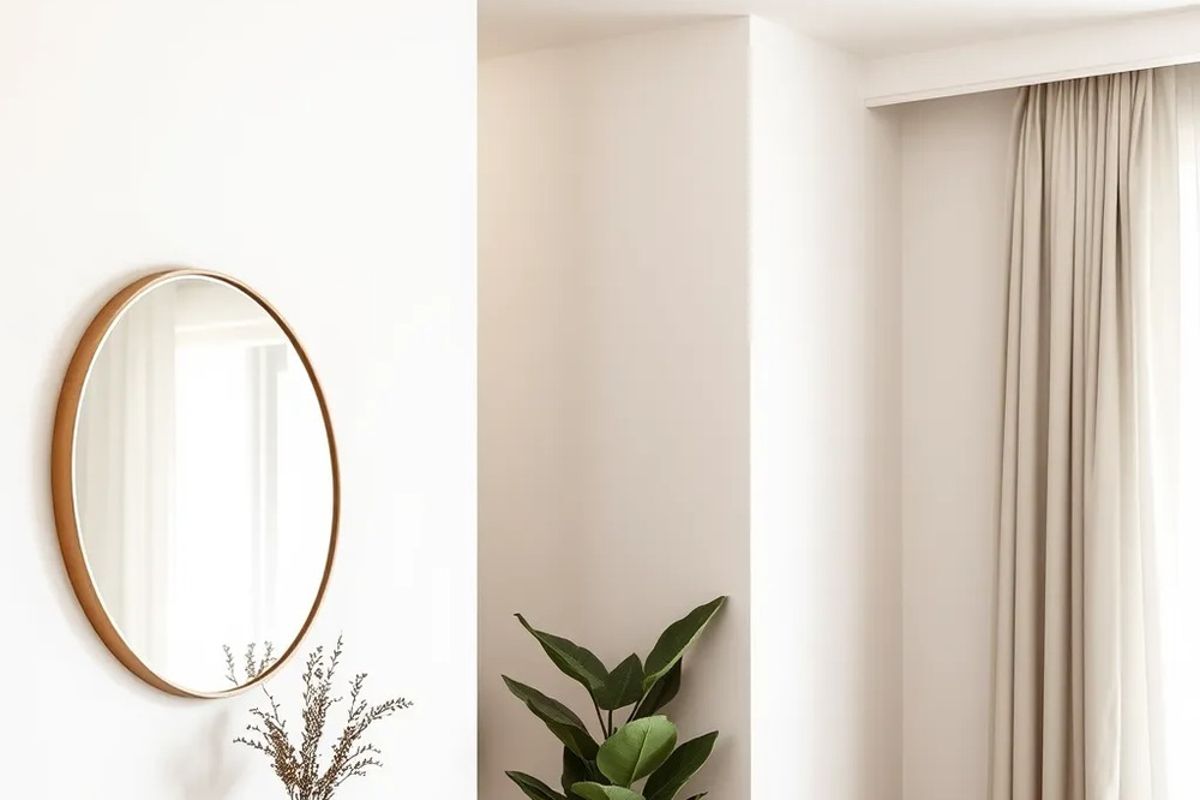
A large mirror reflects light and space. The best spot is usually opposite or beside a window, where it reflects daylight and the view. A mirror facing a cluttered corner just doubles the clutter.
One big mirror usually works better than several small ones. Lean a tall floor mirror against a wall for the same effect without drilling, but secure it so it cannot tip.
3. Keep the floor visible
The more floor you can see, the bigger the room feels.
- Choose furniture with legs: sofas, sideboards, and beds that sit up off the floor.
- Use a rug large enough to sit under the front legs of the main pieces. A tiny rug breaks the floor into small pieces.
- Keep baskets and bags off the floor along walking routes.
4. Choose a calm, light palette
Light walls reflect more light. Warm white, soft cream, and pale greige are common choices. Painting walls and trim in the same or similar colour blurs the edges of the room.
You do not have to give up colour. Keep stronger colours for smaller items like cushions, a print, or a single chair. Repeating one accent colour two or three times looks planned rather than busy.
5. Go vertical
When floor space is limited, use height.
- Tall, narrow shelving holds more than a low wide unit on the same footprint.
- Wall-mounted shelves keep surfaces clear.
- Hooks on the back of doors handle coats, bags, and towels.
- Hang curtains close to the ceiling to make the room look taller.
Leave some wall empty. A wall covered in shelves can feel heavy.
6. Pick furniture that does two jobs
- A storage ottoman can be a seat, a footrest, and a place for blankets.
- A bench with baskets underneath works in a hallway or at the end of a bed.
- A drop-leaf or extendable table stays small most of the time.
- A bed with drawers underneath replaces a chest of drawers.
Measure before you buy, including the space needed to open drawers and doors.
Browse mirrors on Answear Affiliate link Browse storage baskets on Answear Affiliate link
7. Edit what is on show
Clutter shrinks a room more than anything else. That does not mean living with nothing out.
- Give every everyday item a closed home: a drawer, a box, or a basket.
- Keep surfaces mostly clear, with one small grouping of objects on each.
- Look at your open shelves once a month and remove one or two things.
Our shelf styling guide has more on how to keep open storage looking calm.
8. Zone a studio without walls
In a studio, a single room has to be bedroom, living room, and office.
- Use a rug to define the living area.
- Place a bookcase open on both sides as a soft divider; it lets light through.
- A curtain on a ceiling track can hide a bed during the day.
- Keep the same palette across zones so the room still reads as one space.
9. Mind the scale
A small room does not need tiny furniture. A few medium pieces usually look better than many small ones. One comfortable sofa beats two small chairs that nobody sits in.
Avoid very bulky, overstuffed shapes, and look for slimmer arms and lower backs.
10. Keep a clear path
Walk the room from the door to the window. If you have to turn sideways anywhere, move something. A clear route through the room makes it feel larger and safer.
A short checklist
Is the window clear? Is there a mirror catching light? Can you see most of the floor? Is there closed storage for daily items? Can you walk through without turning sideways? If yes, the room is already working harder than its size.
Related guides
Home
A cozy autumn living room with warm neutrals and soft light
Textiles, lighting, colour, and small seasonal touches that make a living room feel warmer without a full makeover.
Home
Shelf styling for a calm, neutral home
How to arrange open shelves with books, ceramics, and storage so they look tidy and personal, not crowded.
Home
A Japandi bedroom you can actually sleep in
How to mix low wood, linen, and empty wall space without turning the room into a showroom.