A Japandi bedroom you can actually sleep in
How to mix low wood, linen, and empty wall space without turning the room into a showroom.
Published 2026-10-09
Some links in this guide are affiliate links. If you use one, Ramelia may earn a commission, at no extra cost to you. Affiliate disclosure.
Japandi is a nickname for rooms that borrow from Japanese and Scandinavian habits: low furniture, natural materials, and fewer objects. The useful part is not the label. It is a bedroom that is easy to reset at night and calm in the morning. This note is about the bed, the light, and what you leave off the floor.
Start with the bed, not the decor
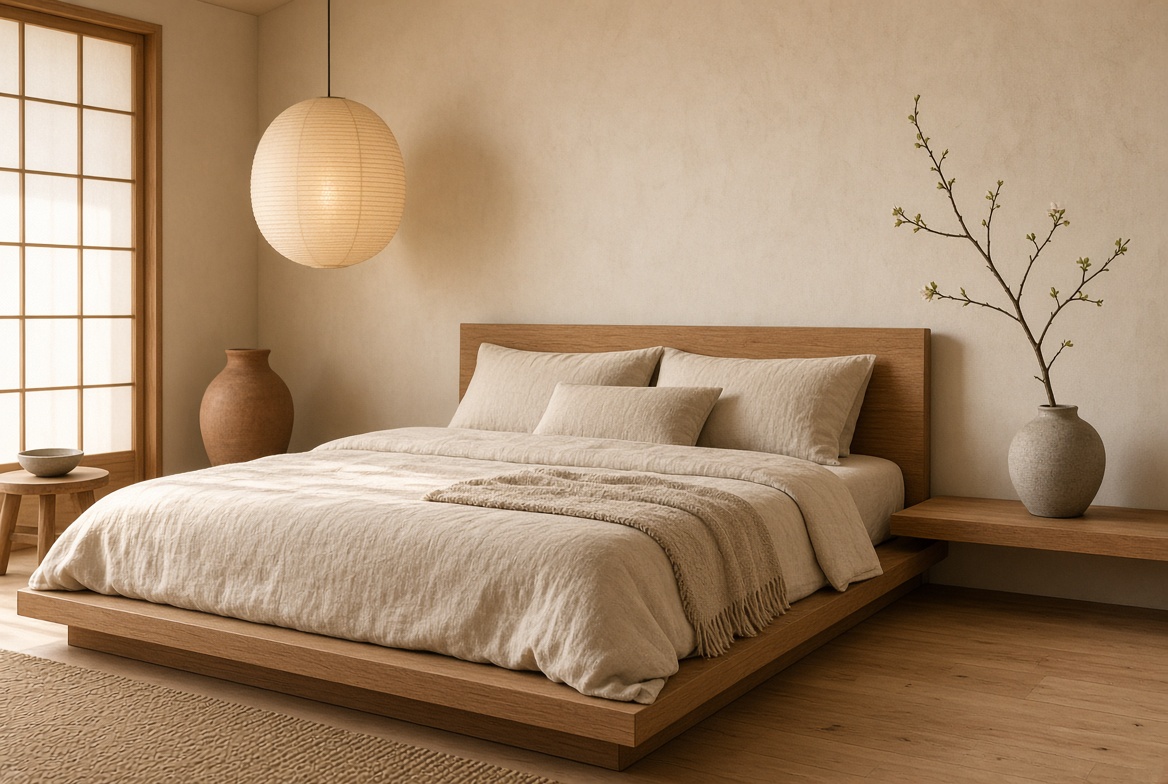
The bed is the largest object, so it sets the room. A low frame in oak, ash, or a pale painted wood keeps the eye down and makes the ceiling feel higher. You do not need a new frame if the one you have is simple. A plain headboard, or no headboard, works. Avoid a tall upholstered shape if you want the quieter look. It is a preference, not a rule.
Linen or washed cotton in oat, stone, or warm white does the visual work. Two sleeping pillows and one spare are enough. A folded throw at the foot gives texture without another pattern. If you like pattern, keep it to one textile, not the duvet, the pillows, and the curtain all at once.
Make the bed in the same order every morning. That single habit does more for the room than a new vase. Smooth the duvet, fold the throw, and put the book back on the shelf. The room reads as finished even when the rest of the house is not.
Light, wood, and one branch
A paper lantern or a linen shade gives a soft pool of light. Place it so you can turn it off without getting out of bed, or keep a second small lamp on your side. Overhead light alone is harsh at night. Warm bulbs, not cool white, keep the plaster from looking grey.
Wood can repeat once or twice: the bed, a low stool, a shelf. Too many different woods start to look accidental. A clay vase and a single branch, or a stem from the garden, is enough of a focal point. Replace the branch when it drops. An empty vase is fine. A shelf of unused objects is not.
Keep the wall opposite the bed mostly clear. One picture, or none, is easier to live with than a gallery you have to straighten. If you want art, hang it at a height you see from the pillow, not only from the door.
What to take off the floor
A calm bedroom fails when the floor holds clothes, cables, and bags. Give those things a place that is not the bed. A basket in the closet for “wear again” clothes stops the chair from becoming a second wardrobe. A short cable run, taped along the bed frame, removes the black line across the floor.
Nightstands should hold what you use after dark: a lamp, water, a book. Chargers can live in the drawer. If you do not have drawers, a small lidded box does the same job. Perfume, extra cushions, and souvenirs can move to a shelf outside the room. The bedside is a tool surface.
Window covering matters more than a new rug. A linen curtain that closes fully will darken the room better than a decorative panel that stops at the sides. A flat-weave rug beside the bed is there for bare feet in the morning. It does not need to fill the whole floor.
Browse bed linen on Answear Affiliate link Browse table lamps on Answear Affiliate link
A reset that takes ten minutes
Once a week, do a short reset. Strip the throw and shake it. Wipe the nightstand. Take mugs out. Open the window for a few minutes if the weather allows, then close it so the room does not get damp. Check that the lantern cord is not pinched behind the bed.
You do not need to buy a matching set to call the room Japandi. Low bed, quiet textile, warm light, clear floor, one living or dried stem. If those five are in place, the room will feel settled on an ordinary Tuesday, which is the point.
Related guides
Home
A cozy autumn living room with warm neutrals and soft light
Textiles, lighting, colour, and small seasonal touches that make a living room feel warmer without a full makeover.
Home
Ways to make a small space feel bigger
Practical layout, light, colour, and storage ideas that make small rooms and studios feel more open and easier to live in.
Home
Shelf styling for a calm, neutral home
How to arrange open shelves with books, ceramics, and storage so they look tidy and personal, not crowded.